Babylonian pressure
Nebuchadnezzar II besieged Tyre for thirteen years. The mainland city submitted while Phoenician trade continued through its island harbour and western colonies.
 Atelier Numen
Collections · 03
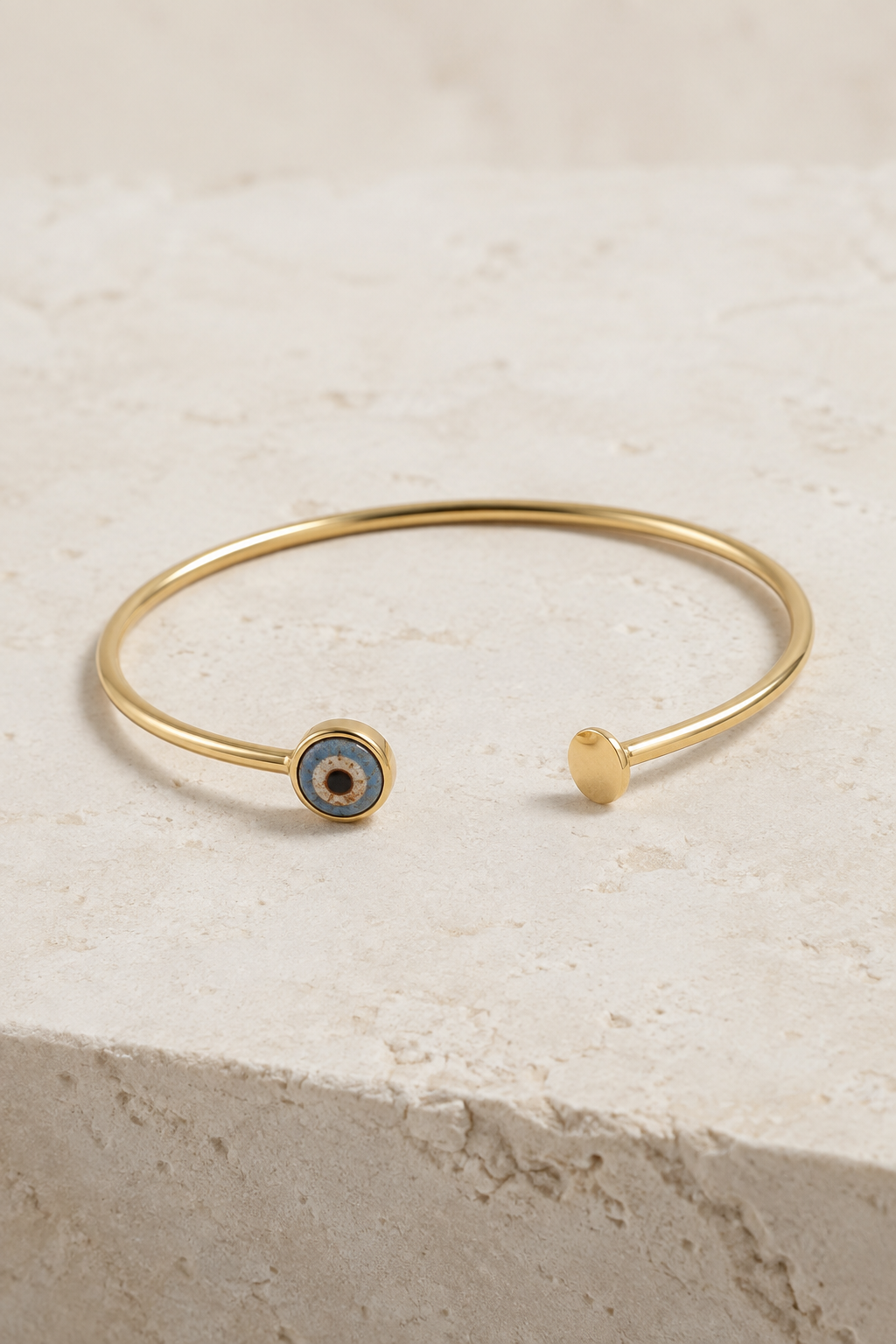
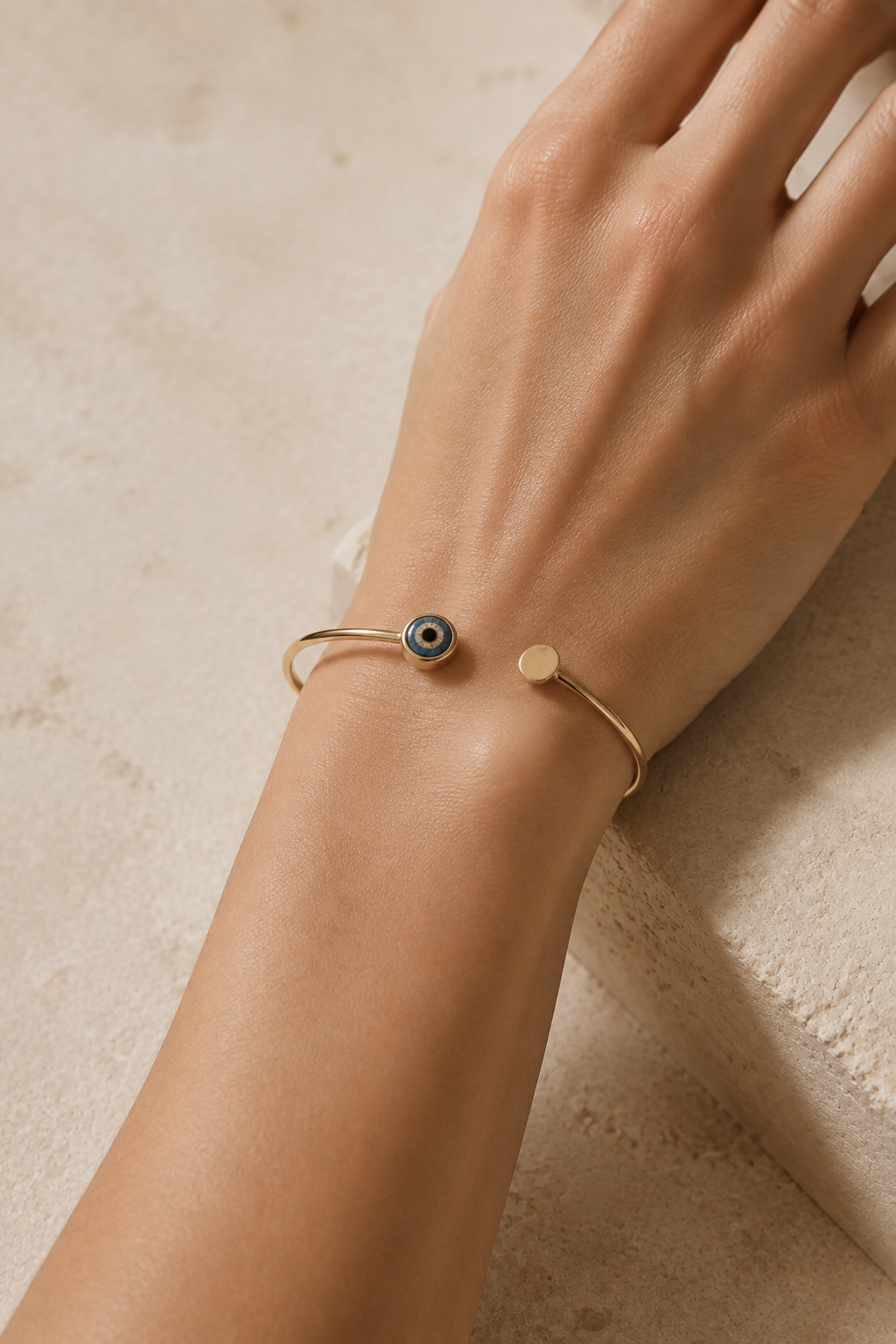
A Phoenician eye of the 6th century BC, and the 18k gold cuff built around it.
The construction
The contemporary gold works as a quiet frame. The ancient eye stays visible from every direction, and the record names every historical and contemporary component.
Each element is documented for its attribution, material, measurements, condition and provenance.
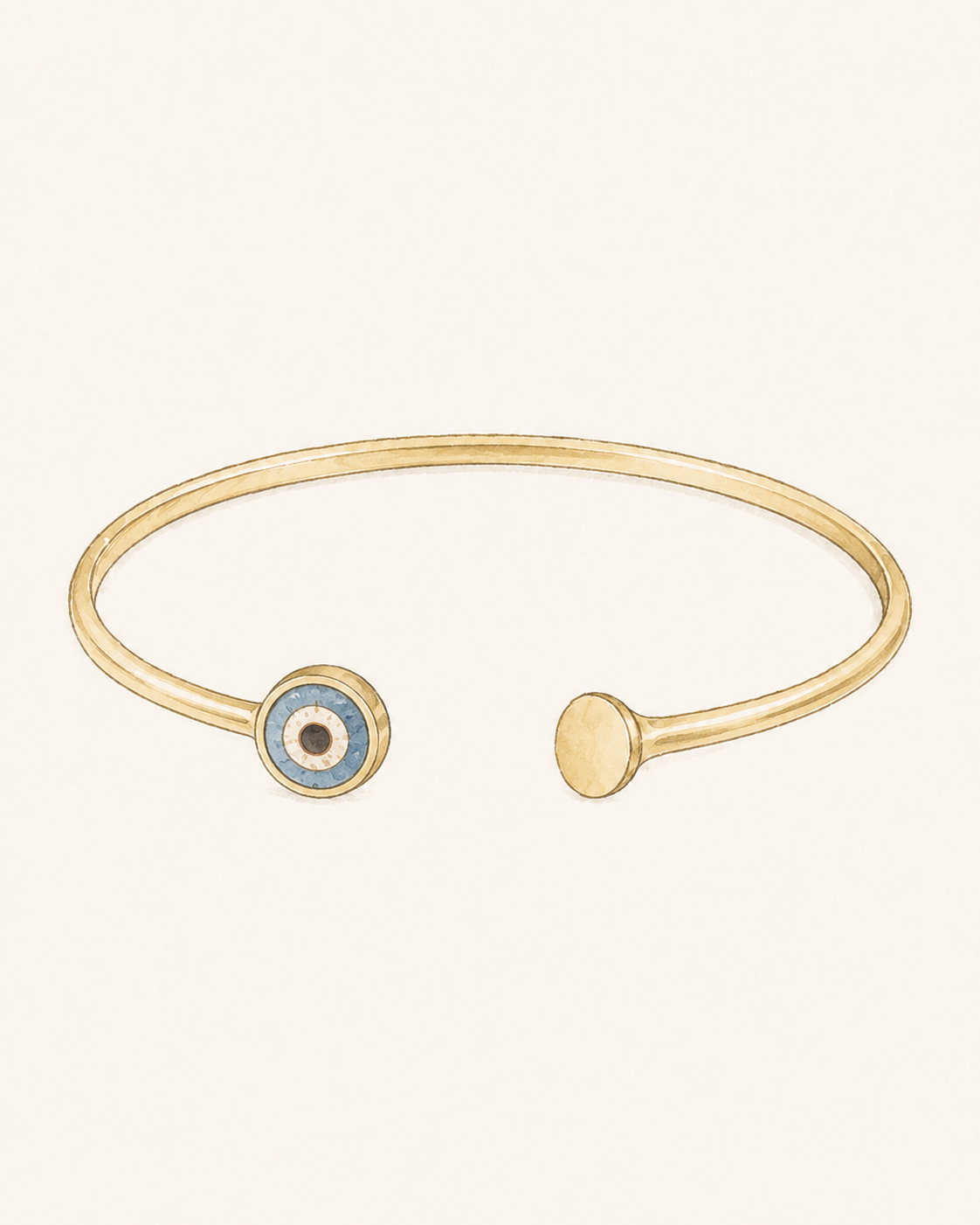
A fine 18k gold curve holds the eye at one end and a small smooth counterweight at the other.
The cuff follows the element’s exact diameter, perforation and weight, and is made specifically around it.
From the drawing board
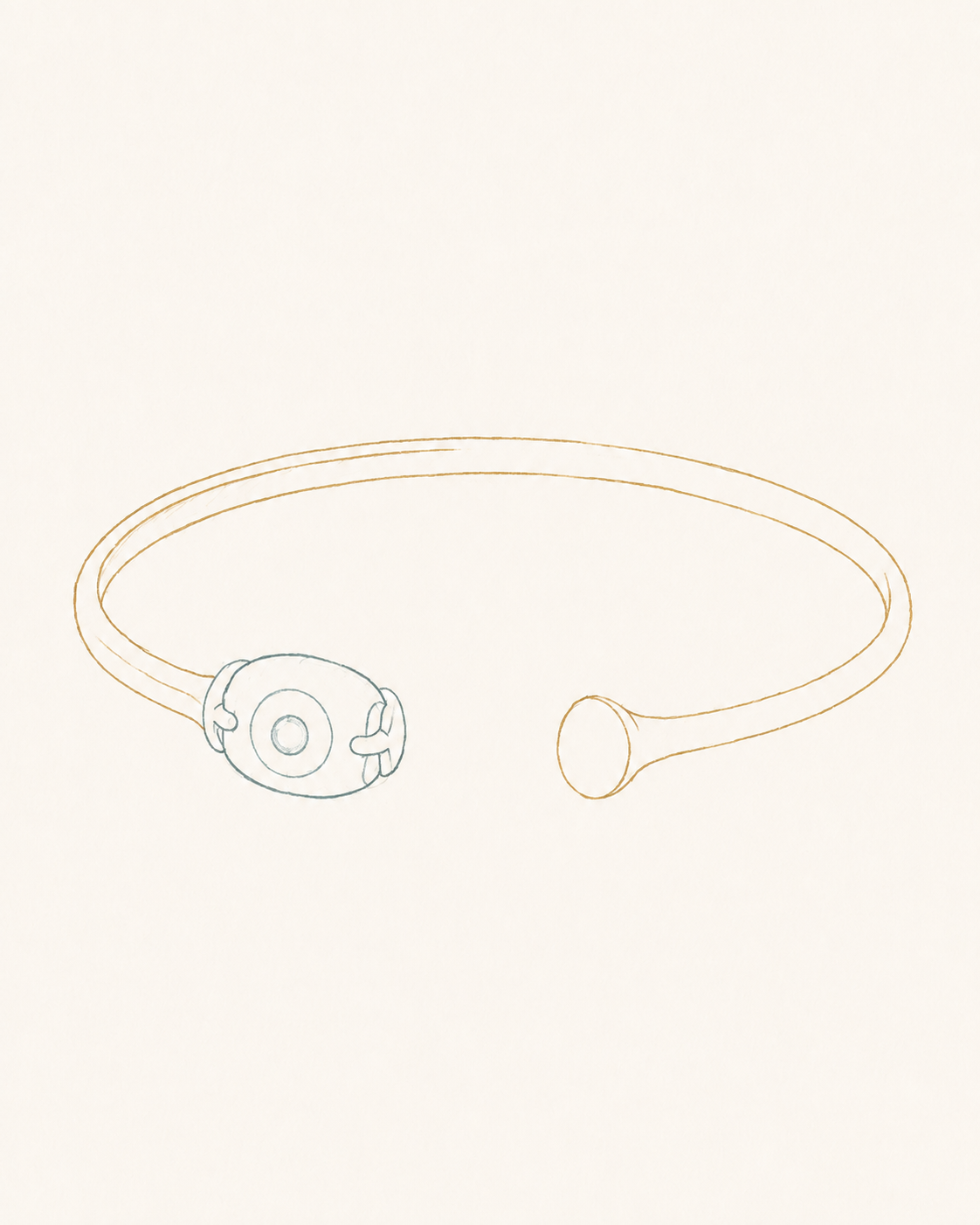
The drawing settles proportion before the gold is cut. It places the eye, the open curve and the counterweight in one measured sequence.
The original work
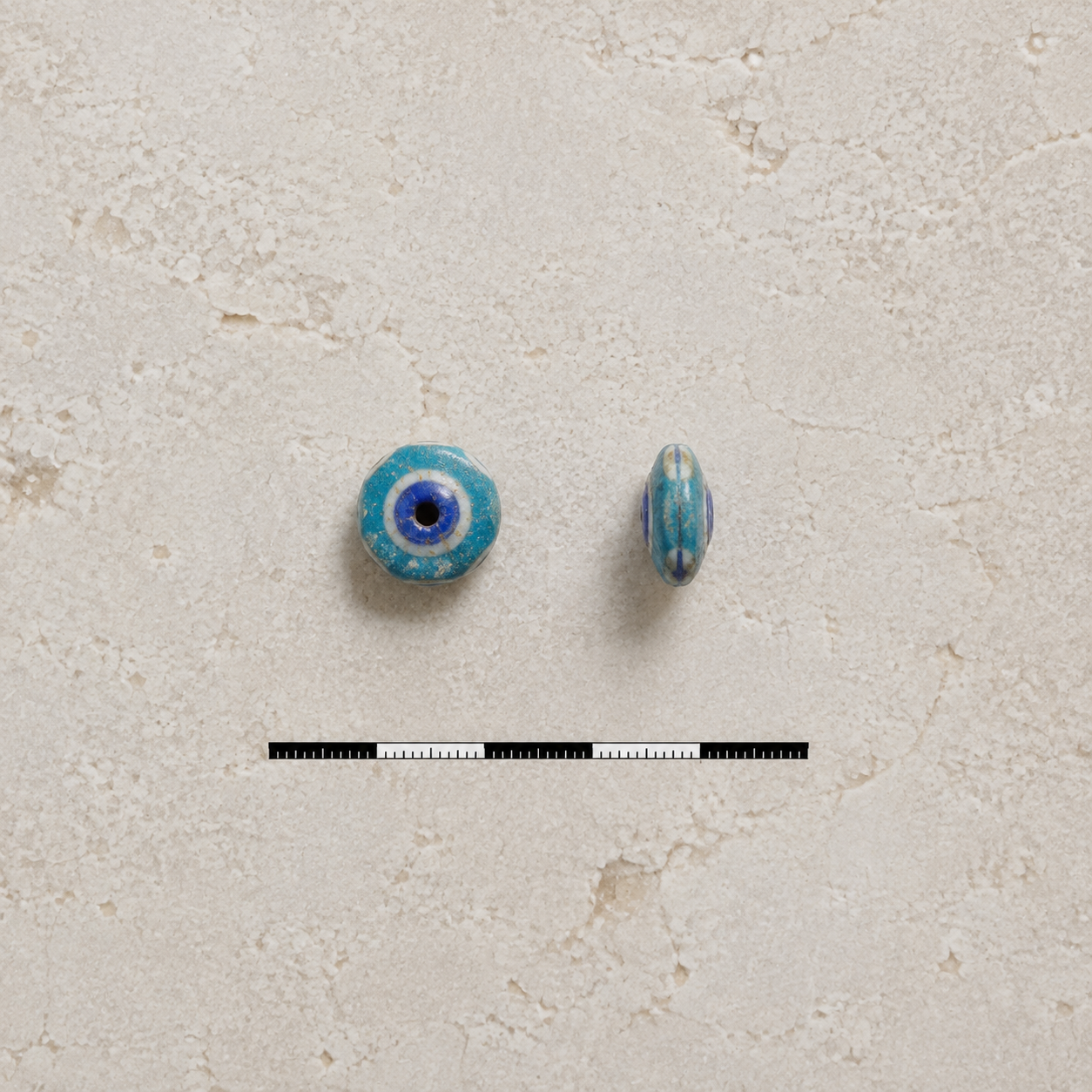
Phoenician workshops formed an element around a heated core, then trailed contrasting rings to establish the white, blue and dark concentric eye. The technique gave a tiny object a legible geometry at close range.
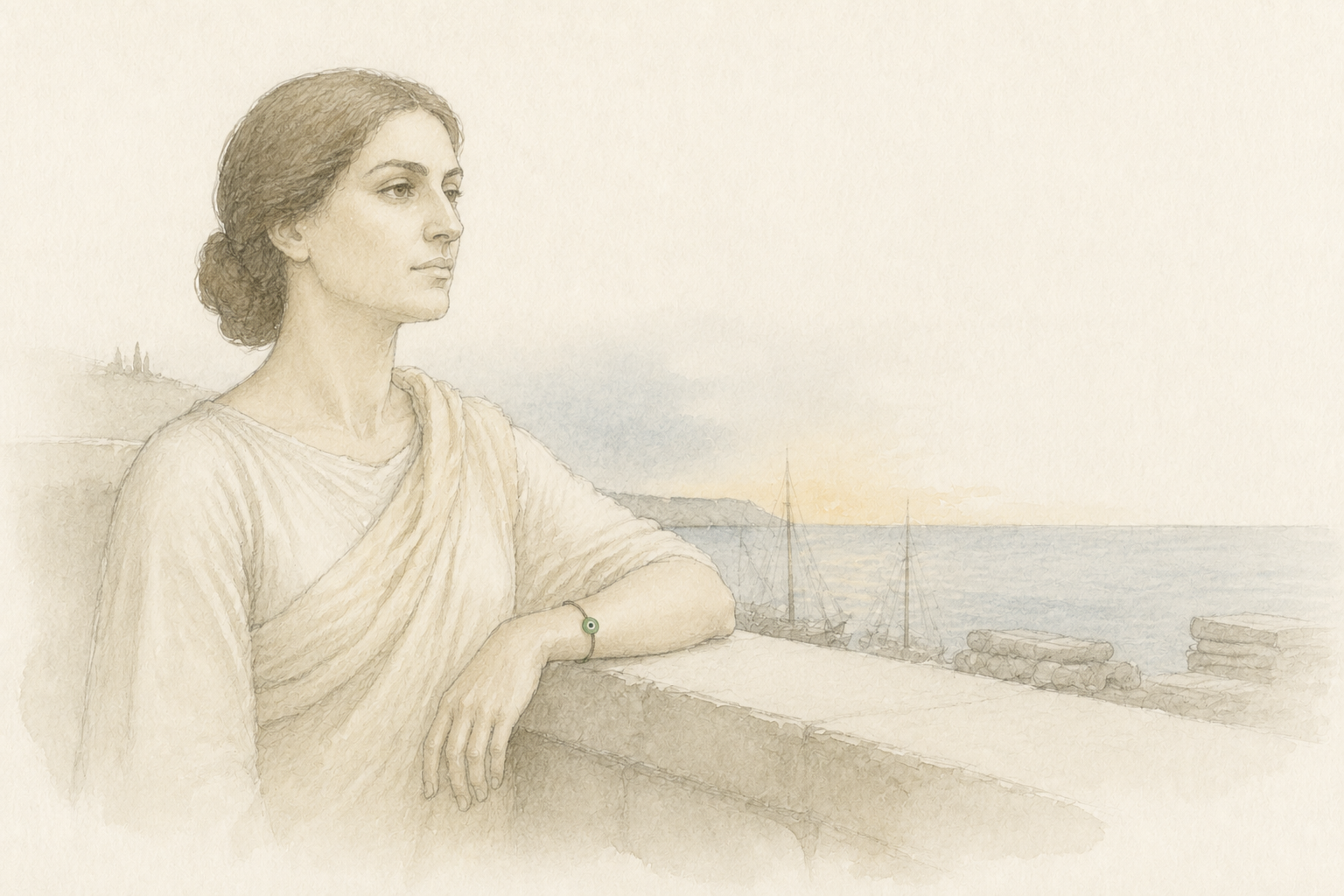
The eye was apotropaic: a form made to meet the gaze and turn harm away. The new cuff keeps that face outward, where it was meant to be read.
The wearer
An eye in glass was made to be met by others: turned away from the body, at the wrist and at the throat, in the harbour cities that carried it from Tyre and Sidon across the sea. It travelled on the person who wore it, and it was set where it looks back.
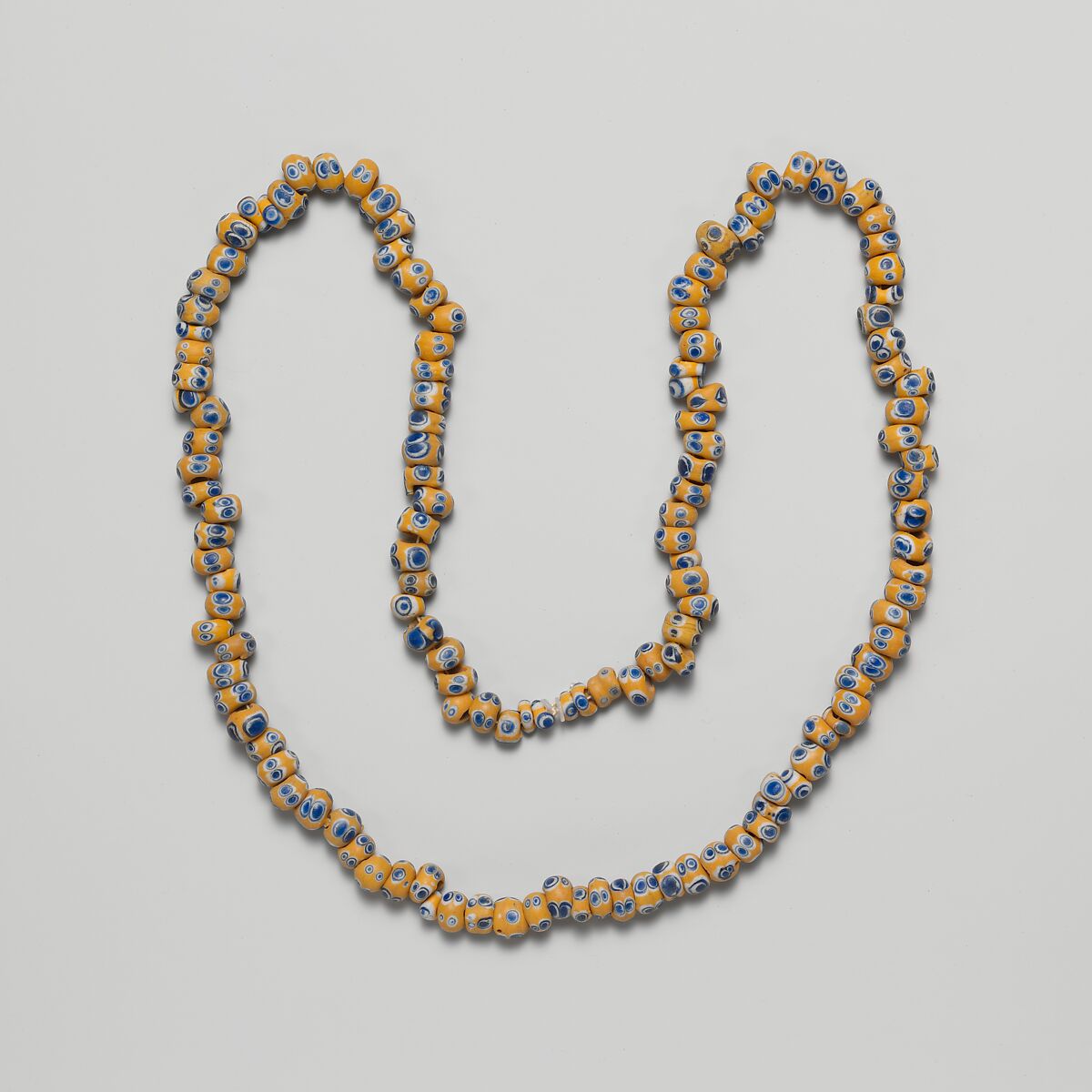
The Metropolitan Museum holds ninety-six centimetres of Phoenician eyes strung and worn as a necklace, and its record names the protective purpose alongside the ornament. That strand is Hellenistic, later than the element studied here, and it shows the same eye in the position it was made for: on a body, looking out.
Read the museum record ↗The sixth century
Phoenicia was a chain of city-states rather than a single kingdom. Through the sixth and fifth centuries BC, Tyre, Sidon and Byblos kept civic institutions, cults and workshops while imperial power changed hands around them.
Nebuchadnezzar II besieged Tyre for thirteen years. The mainland city submitted while Phoenician trade continued through its island harbour and western colonies.
Cyrus II took the Levant. Under Persian administration the Phoenician cities kept local rulers, temples and workshops of their own.
Phoenician ships formed the core of the Persian navy in the Aegean campaigns, and Sidonian captains held the senior commands.
After a seven-month siege Tyre fell, closing Phoenician political independence while Carthage continued in the western Mediterranean.

A work from the period
The Metropolitan Museum’s Phoenician, Cypriot eye is dated from the sixth to the fourth century BC. It is rod-formed and trailed, and its double-eye pattern makes the construction visible on the surface.
That published record offers a close historical comparison. This bracelet carries an object record of its own, drawn from its own element.
Read the museum record ↗The Phoenician world
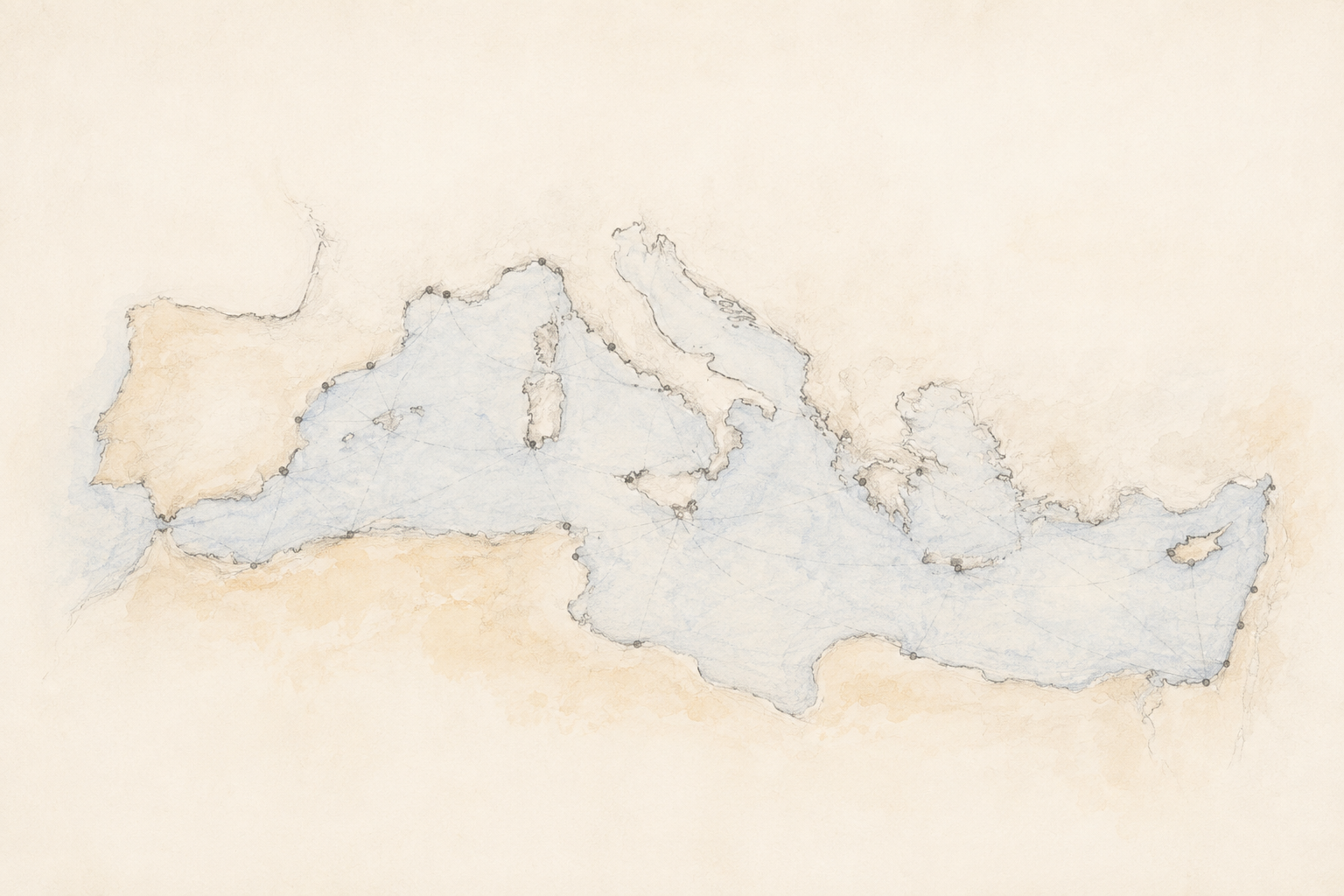
Levantine cities, Cyprus, North Africa, Sicily and Iberia faced the same water, and the work moved along it in every direction. The map establishes the historical field of exchange while the individual element retains its own record.
Historical context · 6th–5th century BC
The record
Reserve a place in the first series.
The Arrivals
Pieces are found one at a time, and only the intact ones are catalogued. Subscribers see each arrival first, with its record, its condition and its price.