Dynasty 26 · Saite
Rulers from Sais reunified Egypt and opened it to Greek and Levantine trade. Archaising art looked back deliberately to the Old and Middle Kingdoms.
 Atelier Numen
Collections · 02
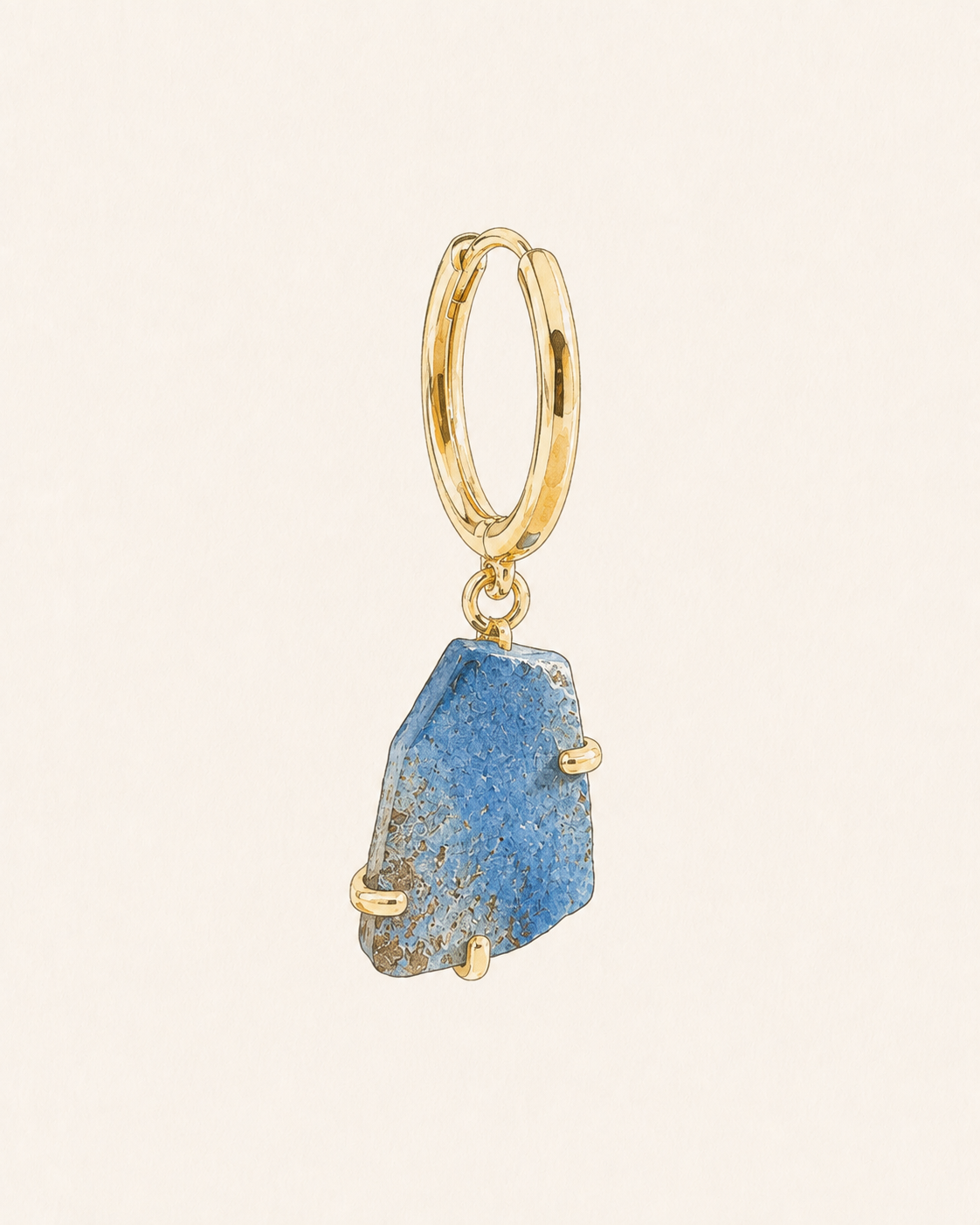
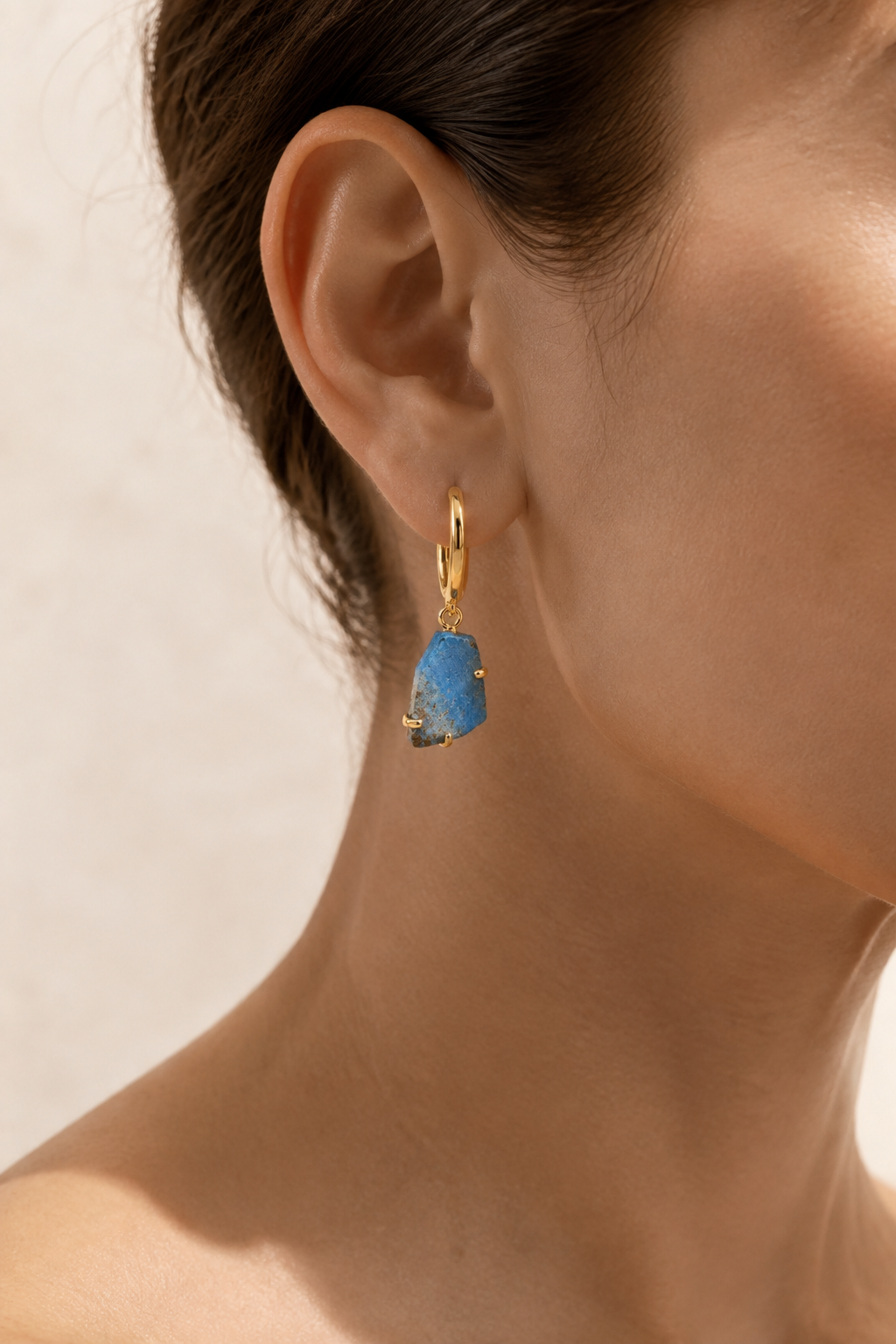
A Late Period Egyptian faience fragment, and the 18k gold earring built around it.
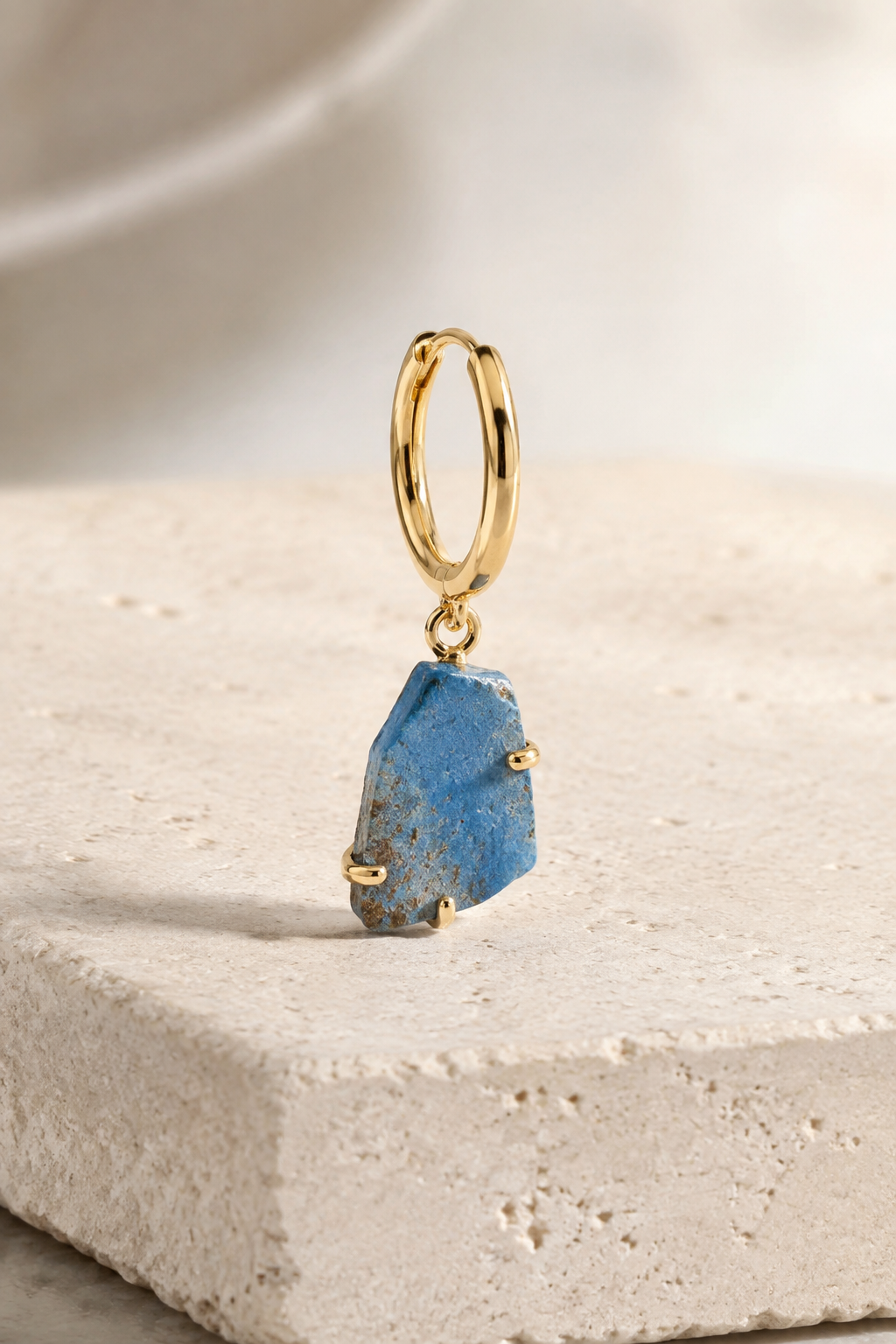
The construction
The gold setting carries only the structure, balance and ear wire. The irregular faience edge stays in view, and the final record names every historical and contemporary component.
Each fragment is documented for its material, date, measurements, condition and provenance.
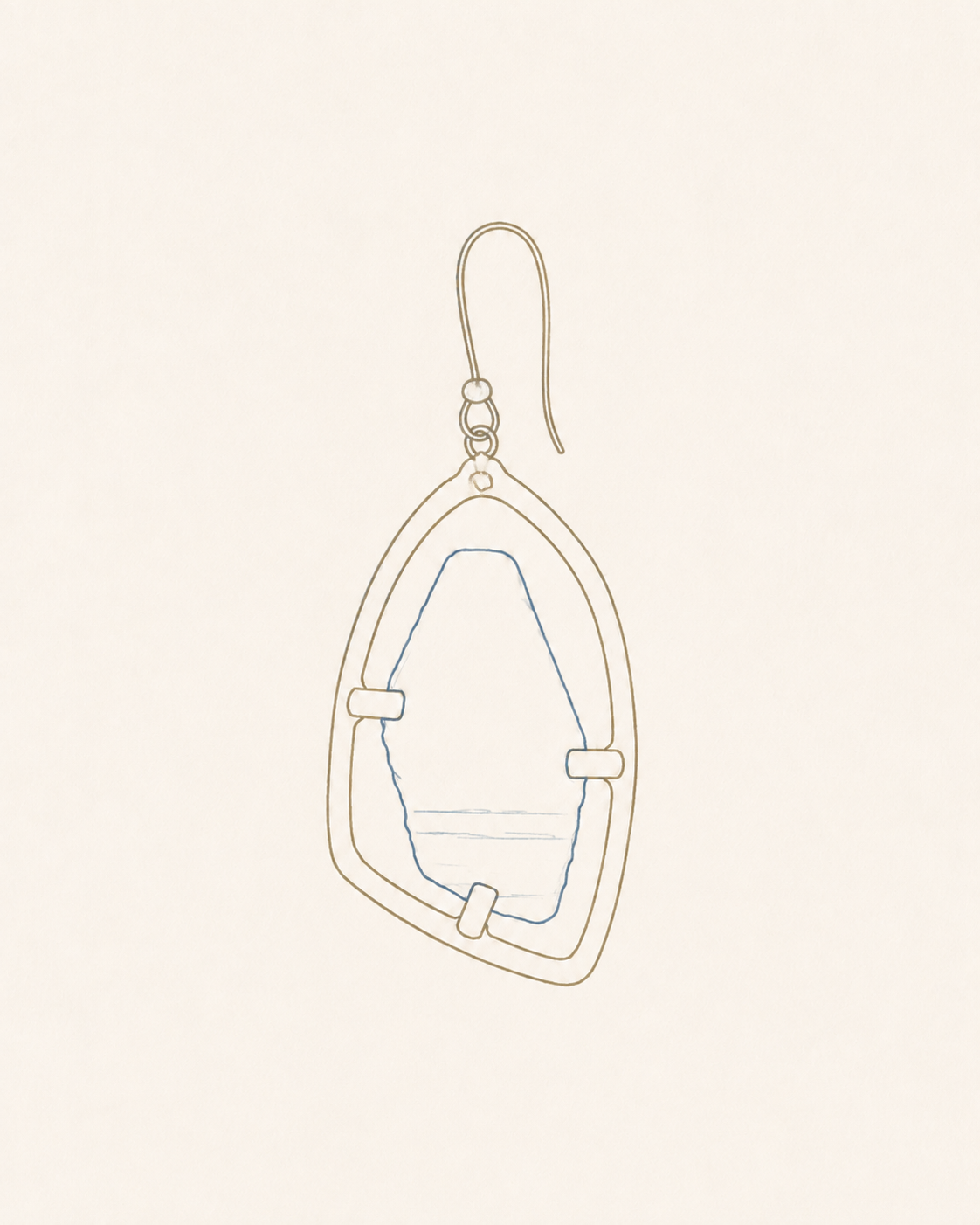
Three small 18k gold supports hold the fragment while keeping its surviving edge visible.
An open contemporary frame and a simple gold hook are made specifically around the historical element.
From the drawing board
The drawing settles proportion before the gold is cut. It places the frame, its three retainers and the ear wire in one measured sequence.
The original work
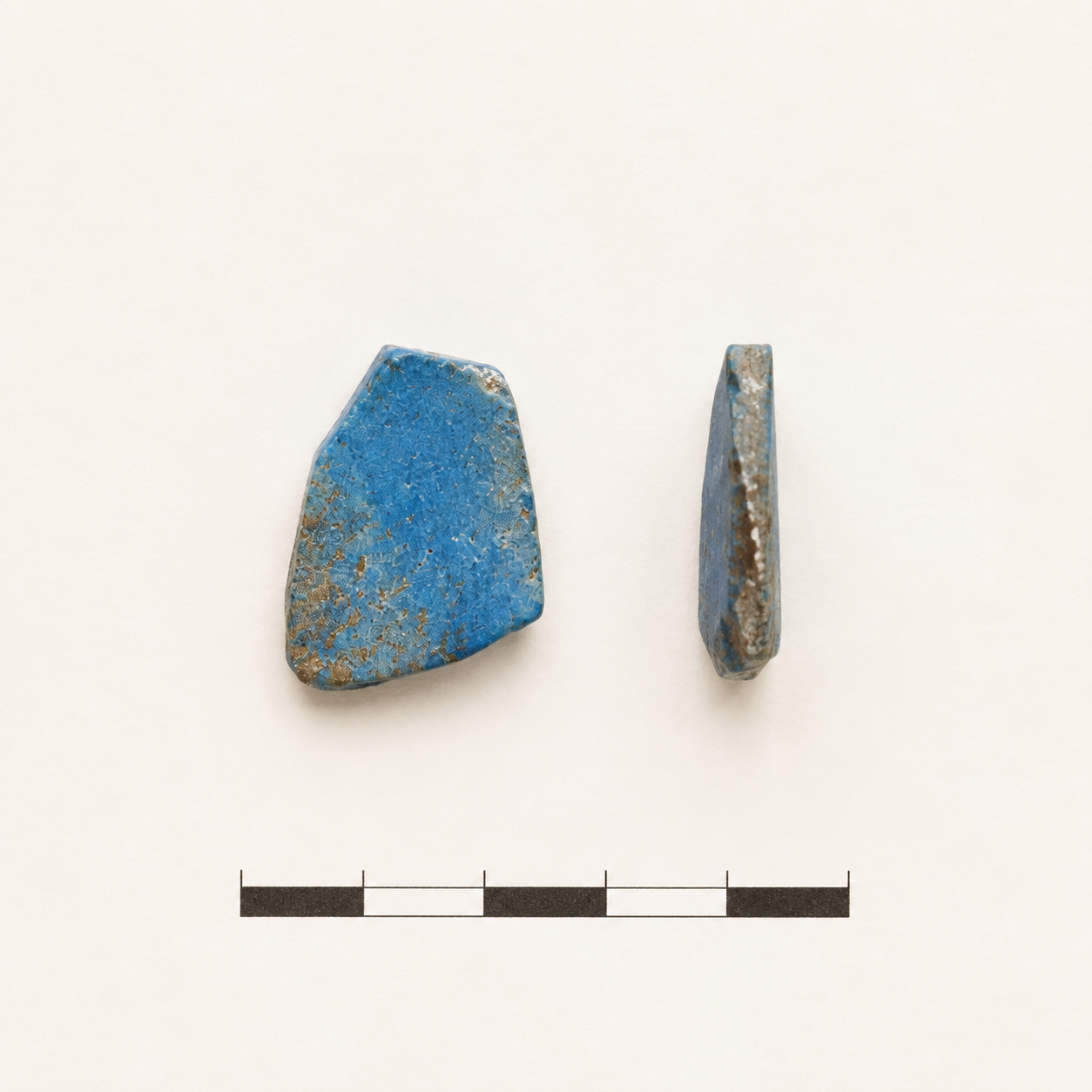
In the kiln the colour rises to the surface and sets as a vitreous skin. That blue-green is one of the material’s defining signatures. Faience travelled through workshops, sanctuaries and burials as amulets, elements of dress and small offerings.
A surviving fragment carries the break as part of its record. The new setting keeps that edge visible as the evidence of the original work rather than concealing it.
The wearer
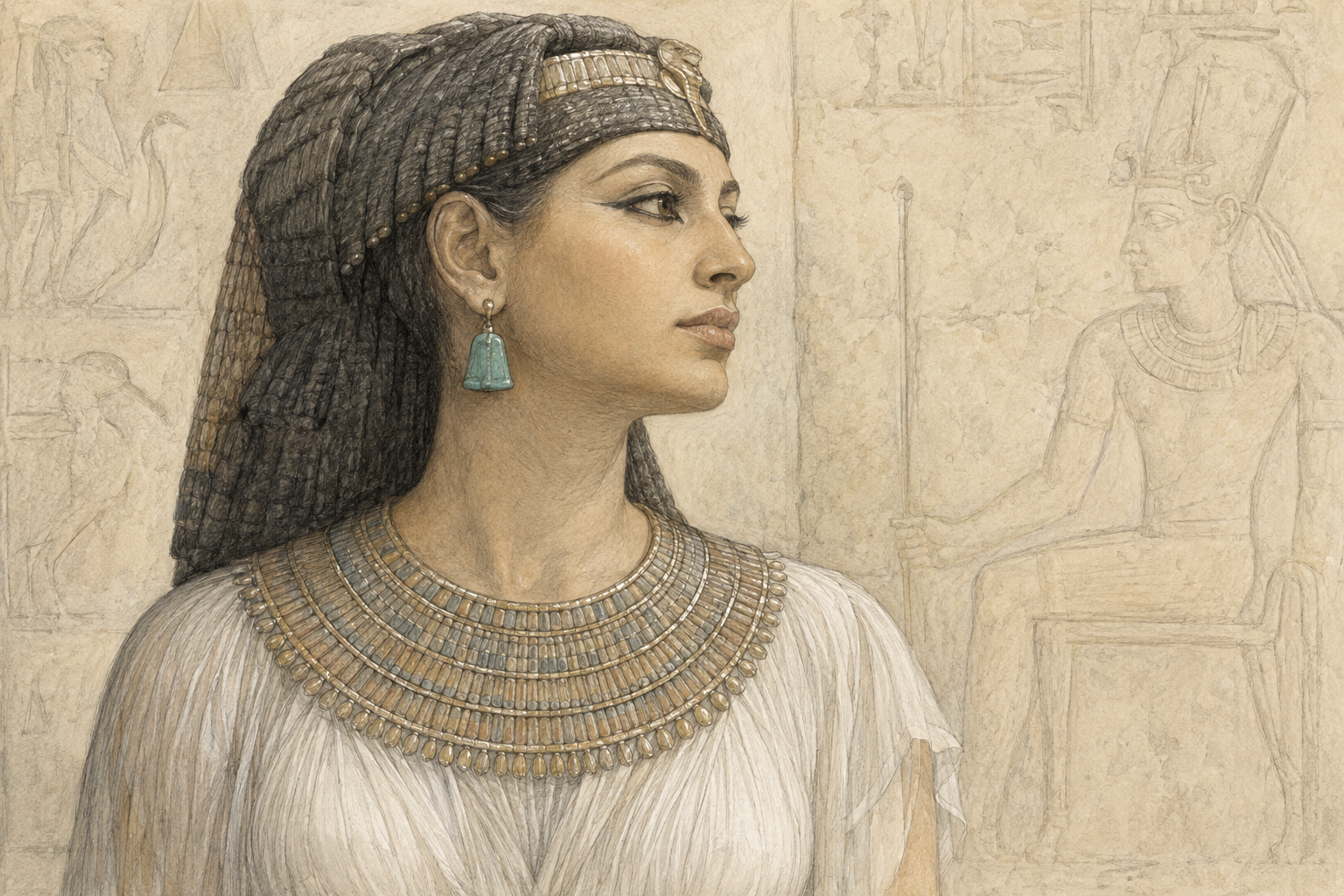
Glazed colour belonged to the person as much as to the temple. A woman of standing in the Late Period appeared in fine pleated linen, a broad collar and worked metal, with glaze answering the light at the ear — the one ornament that moves each time the head turns.
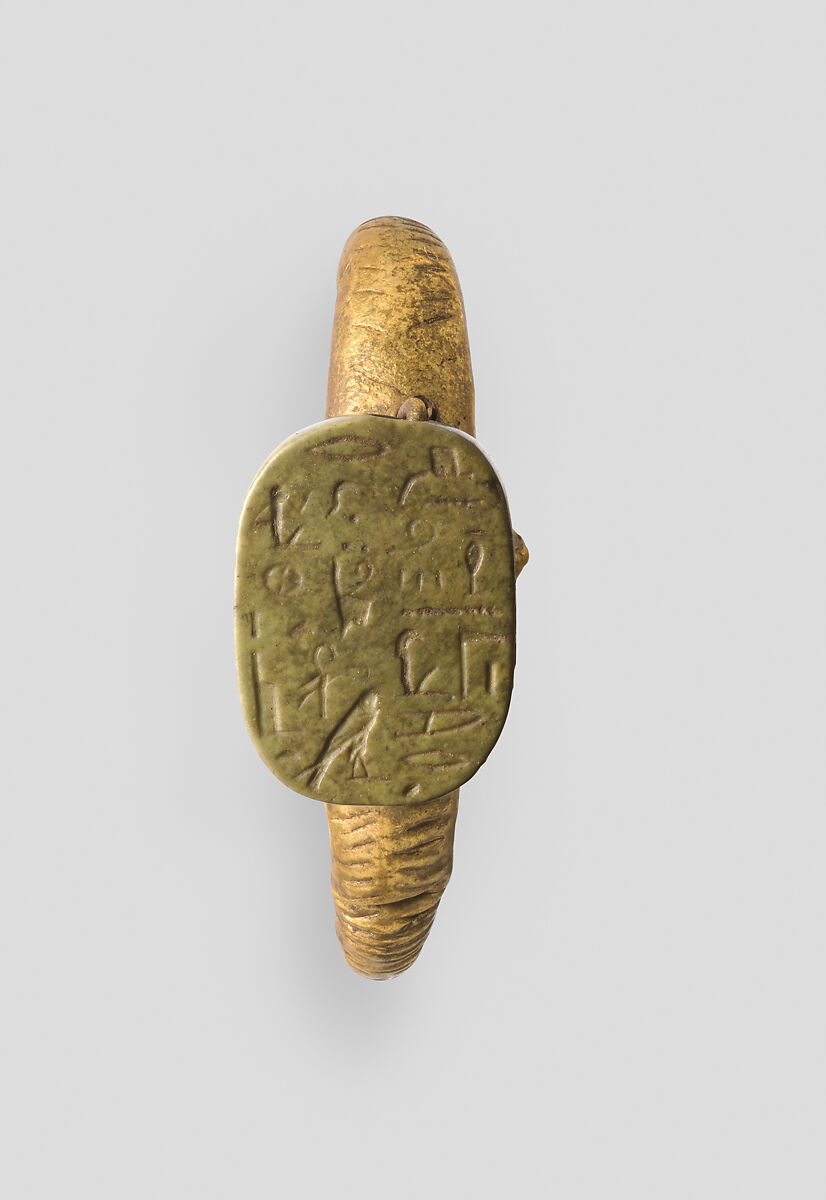
The practice has a precedent, and the Metropolitan Museum holds it. This gold earring was made in the Roman period, and an older Egyptian plaque — an inscribed scaraboid naming one Harsiese — was mounted on it as its ornament. Placing an ancient element in a new piece of jewellery is an ancient decision, taken here some eighteen centuries ago.
Read the museum record ↗The Late Period
A Late Period attribution spans 664 to 332 BC, from Dynasty 26 to the arrival of Alexander. Across those three centuries Egypt moved between native rule and Persian administration while its workshops kept producing faience without interruption.
Rulers from Sais reunified Egypt and opened it to Greek and Levantine trade. Archaising art looked back deliberately to the Old and Middle Kingdoms.
Cambyses II took Egypt in 525 BC. The Achaemenid kings ruled as Dynasty 27, and Darius I completed a canal linking the Nile to the Red Sea.
Native rulers regained control for six decades. Nectanebo I and II built widely, and temple workshops returned to full activity.
Artaxerxes III restored Persian rule until Alexander entered Egypt in 332 BC, closing the Late Period.
A work from the period
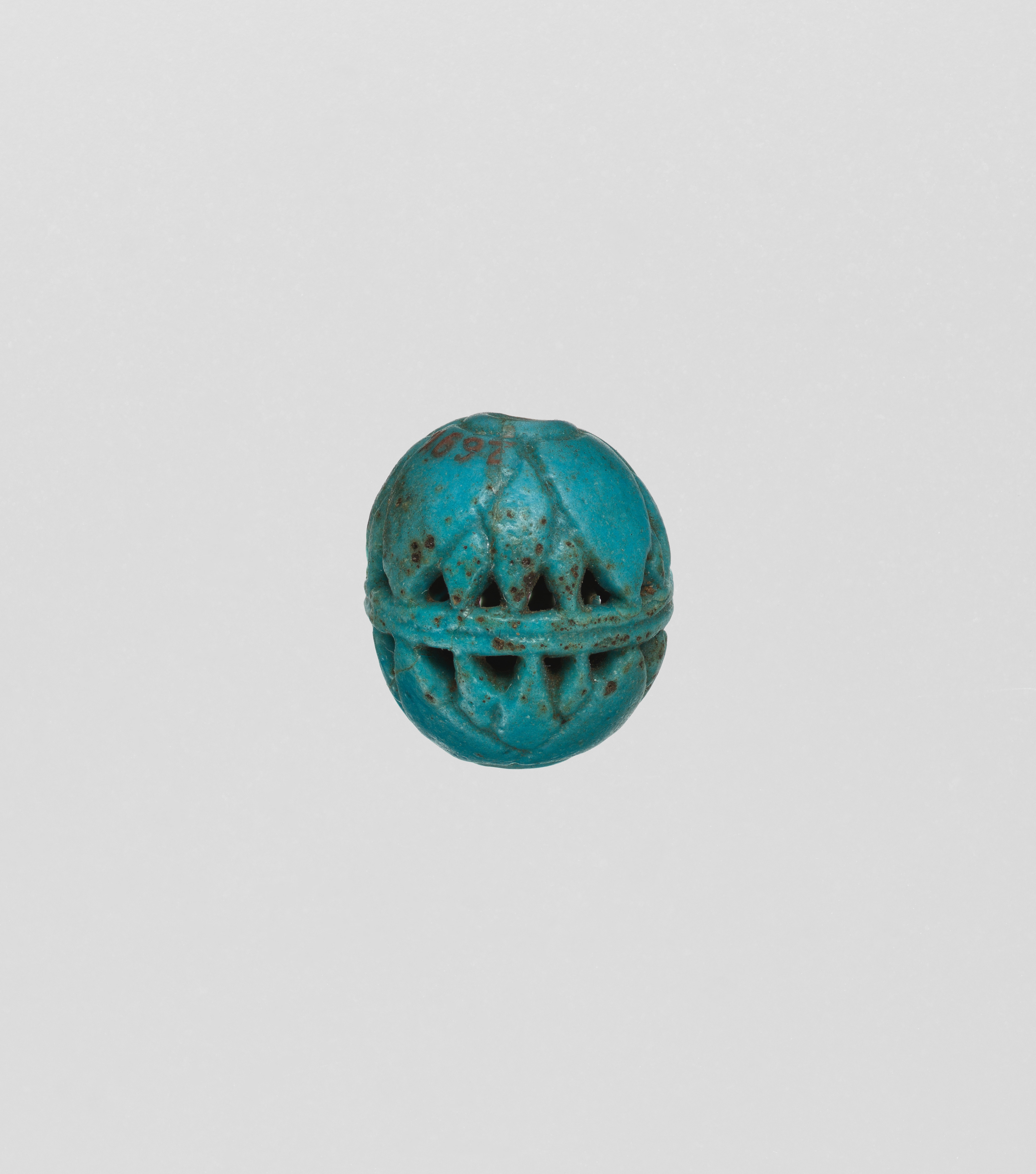
The Metropolitan Museum’s openwork faience belongs to the Late Period and measures 1.4 cm across. It gives the period a material reference: a small object in which form, perforation and glaze work together.
That museum object documents its own excavation history and record. It frames the historical field; this earring carries an independent record of its own.
Read the museum record ↗The Egyptian world
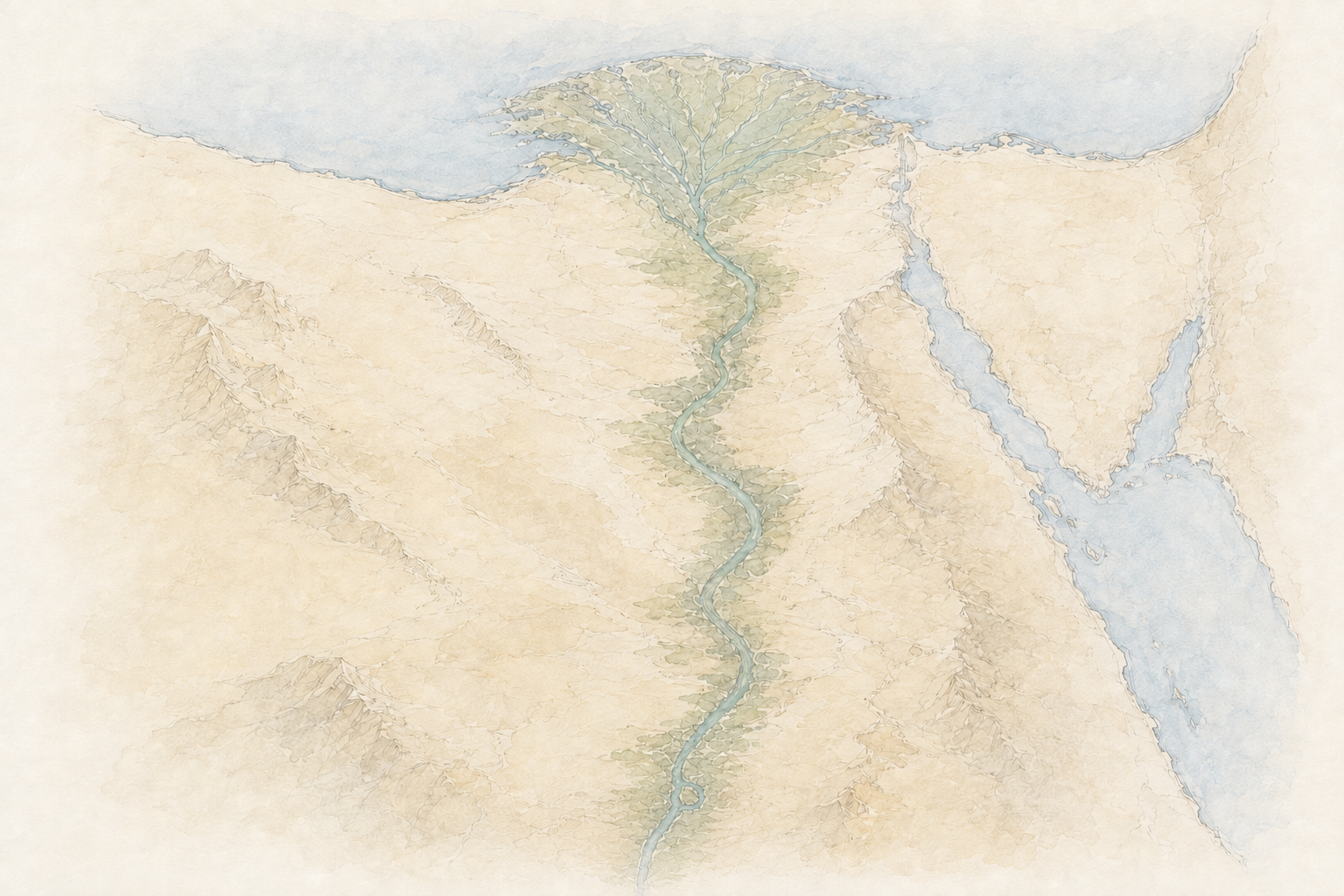
Along the Nile, faience travelled through daily life in dress, vessels and offerings, from the Delta workshops to Thebes and the southern frontier. The map gives the period its scale while the individual fragment retains its own record.
Historical context · 664–332 BC
The record
Reserve a place in the first series.
The Arrivals
Pieces are found one at a time, and only the intact ones are catalogued. Subscribers see each arrival first, with its record, its condition and its price.